

How to Get Genuine Smiles Out of Kids During a Photoshoot
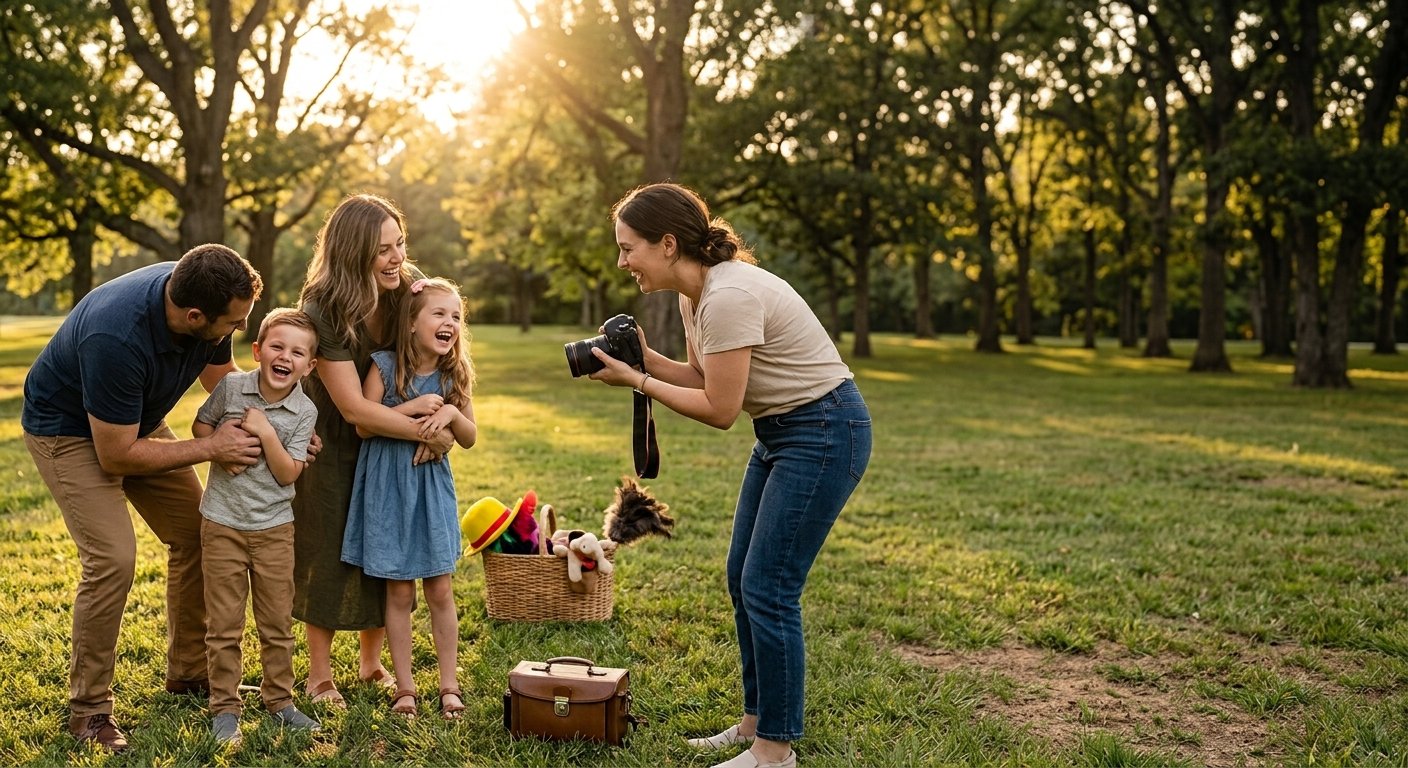
If you have ever tried to get a toddler to "say cheese," you already know the problem. The second a child is told to smile, you get the opposite of a smile: a tight, squinty, teeth-baring expression that looks nothing like the kid you know.
The good news is that real smiles are not something you force out of a child. They are something you create the conditions for. After years of photographing families, I have learned that the best expressions almost never come from asking for them. They come from play, patience, and getting out of the way at the right moment.
Here is how I actually get genuine smiles, and how you can help, when the question is how to get kids to smile for photos.
Stop Asking Them to Smile
This is the first and most important rule. The word "smile" is the enemy of a real smile. The moment a child hears it, they perform, and performance reads as fake in a photo every time.
Instead of asking for a smile, I ask for everything around it. I make them laugh, I give them something to do, I ask a silly question. The smile shows up on its own, because it is a reaction to something real rather than an instruction. A good family photographer spends far more energy being entertaining than being directive.
Turn the Session Into a Game
Kids do not understand "pose for the camera," but they understand play completely. So the whole session becomes a game. I might ask them to tell me a secret, to whisper the silliest word they know, to show me their best dinosaur roar, or to tickle a parent on the count of three. I ask them to run to a tree and back, or to give the biggest hug they can.
Every one of those is a game to the child and a photo to me. The running, the hugging, the laughing at their own joke, that is where the real expressions live. When kids are having fun, they forget the camera is even there, which is exactly the point.
Let Them Lead Part of the Session
Children relax when they feel some control. If a child is shy or resistant at the start, handing them a little ownership works wonders. I might let them pick the next spot, choose who they stand next to, or decide what game we play. Sometimes I let an older kid "help" by pressing the shutter or checking the back of the camera.
That small shift, from being told what to do to being part of the plan, changes a child's whole energy. A kid who feels like a participant smiles far more easily than a kid who feels like they are being managed.
Time It Around Naps and Snacks
This one is pure logistics, and it matters more than any trick. A tired or hungry child will not give you a genuine smile no matter how funny you are. The single best thing a parent can do is schedule the session around the child's rhythms: after a nap, not before, and after a snack, not during the pre-meltdown hunger window.
For younger kids and babies, that often means late morning or early evening. It is worth telling your photographer your child's schedule honestly, so the session lands when your kid is at their best rather than their worst. Snacks on hand during the session help too, both as a bribe and as a reset when energy dips.
When You Have Several Kids of Different Ages
No child smiles for a full hour straight, and they are not supposed to. I build breaks into every family session, little pauses where the kids can run around, have a snack, or just be done for a minute. Those breaks are not wasted time. They are often where the most relaxed photos happen, once the pressure is off.
And if a meltdown comes, which it sometimes does, the worst thing to do is panic. Kids feel a stressed parent instantly, and it makes everything harder. A calm "that's okay, let's take a break" resets the mood far faster than trying to push through. Some of my favorite photos have come right after a good cry, when the whole family is laughing about it.
A Quick Guide for Parents Before the Session
A few simple things on your end make a big difference. Come rested and fed, with snacks packed. Keep your own energy light and playful, since the kids will follow it. Avoid over-coaching them in the car on the way, which only builds pressure. And trust your photographer to handle the silliness, so you can simply enjoy being with your kids rather than managing them. The less you worry about "getting the shot," the more likely the real ones happen.
A Couple of Common Questions
What if my child is really shy? That is completely normal, and a good photographer plans for it. Shy kids usually warm up over the first fifteen or twenty minutes once they realize it is just play. Pushing early makes it worse, so patience is the whole game.
What age is hardest to photograph? Toddlers test everyone, since they have strong opinions and short patience. But with the right timing and a playful approach, even the toughest age produces beautiful, genuine photos.
Should we bribe with treats? A snack reward works fine as part of the fun, but it should not be the whole strategy. The real smiles come from play, not pressure or payment.
Let's Capture Your Family as It Really Is
The best family photos are not the ones where everyone performed a perfect smile. They are the ones that look and feel like your actual family, mess, giggles, and all. Create the conditions for real moments, and the genuine smiles take care of themselves.
Planning a Maternity Session?
The best family photos happen when everyone forgets the camera is there. Guillermo Muñoz photographs families, maternity, and couples with an emphasis on real connection, play, and the moments that make your story yours.
